Cold Email Meaning: Everything You Need to Know
The meaning of cold email is to send an email to someone you haven’t interacted with before for business, lead generation, or partnership opportunities.
Written by

Shatavisha Chatterjee
Published on
August 7, 2025
12
min
Cold email is a strategic outreach email method used by companies to interact with prospects who haven’t interacted with them before. It is done with the goal of starting a conversation, building a relationship, or generating business opportunities.
If you have recently heard of the term“cold email” and want to understand what it really means, you're in the right place.
This blog will explain the cold email meaning, how it differs from other forms of email, and how to use it effectively in 2026.
What is a Cold Email? Meaning & Definition
A cold email is an unsolicited email that you send to people whom you have never interacted with before. It is personalized, relevant, and written to start professional relationships, and not to sell immediately or promote to a mass list.
Think of it as a digital introduction, which is similar to walking up to someone at a business event and starting a conversation.
Please Note: Unlike spams, cold emails are targeted, thoughtful, and sent to recipients who are likely to benefit from the sender’s offer.
Cold Email Is a Process, Not Just an Email
One of the most common mistakes you make with cold email is treating it as a single message instead of a system.
Cold email does not work in isolation, it’s a part of a larger outbound process. So it includes targeting the right audience, setting up deliverability correctly, and writing relevant emails.
At the same time it also includes following up consistently, and optimizing based on responses.
Think of cold email like networking, you don’t introduce yourself once and expect results immediately. Rather you start a conversation, follow up, and build context over time.
To make sure your cold email gets maximum response you must:
Identify the right Ideal Customer Profile or ICP
Make sure your email account is warmed up and trusted
Send a relevant first email
Follow up when there’s no response
Track replies and improving future outreach
When you write a cold email as a system rather than a one-off attempt, it becomes a reliable and scalable outreach channel instead of spam.
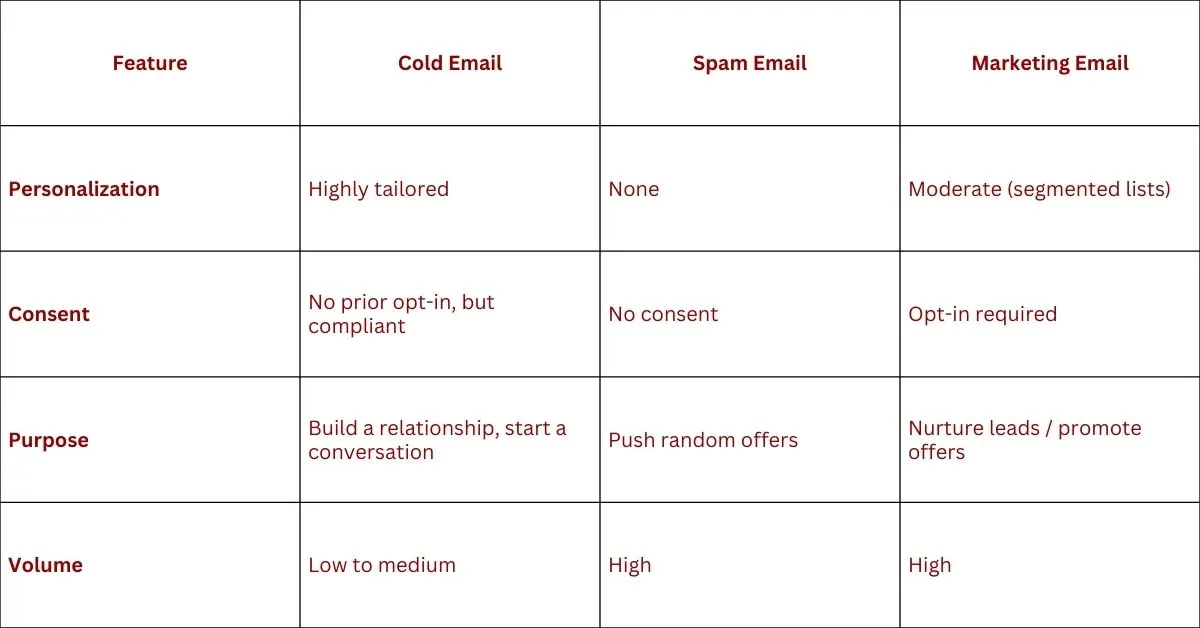
Cold Email vs Spam vs Marketing Emails
Cold Email Example
Let’s say you’ve built a new training app for sales reps in the healthcare industry. Here's how a cold email to a medical company might look:
Subject: Quick way to train your medical reps?
Hi [First Name],
I noticed your team is expanding rapidly, and I wanted to share something that might help.
We’ve built a lightweight app designed specifically for healthcare companies to train their sales reps quickly and effectively, no longer onboarding or complex dashboards.
Would you be open to a 10-minute call this week to see if this could support your training goals?
Best,
John Doe
Founder, XXX Company

Why Should You Send Cold Emails
Cold email remains one of the most powerful methods for success, when they have limited time or money. Here are the reasons why you should consider cold emailing:
Maximum Impact with Targeted Outreach
When you have a clear way of approaching your prospects, your outreach becomes refined. And it helps you to reach relevant prospects without dealing with unnecessary marketing channels.
Solid Leads Through Prospecting
When you reach your prospects through highly targeted emails, you get a clean list of prospects matching your ideal customer profile and verify their emails.
Highlighting Value Through Cold Emails
Through your cold emails, you propose your services among prospects. This helps you to highlight your value among your connections, and they understand why you stand out from the crowd.
Build New Relationships
Your cold emails help you to build new connections from scratch. So, you build long-term credibility among your prospects and they trust you over new players in the market.
Cost Effective Marketing
Cold emailing is one of the most affordable ways to market your business. While traditional marketing, and online ads cost hundreds and thousands of dollars, cold emails cost $30-$100 per month.
It is a Scalable Method
You can expand your outreach process as your business grows, and it helps you to reach wider audiences, and build better connections.
Data-Driven Campaigns
Cold email data like open and reply tracking helps you to understand which outreach process is working best for you. So that way you can tailor your campaign based on your results, and improve your results.
Time Saving Process
You can create your campaign and automate your email campaigns. It will help you to save your time, and focus on other things that are important for your business.
How Cold Email Fits Into Modern Outbound Strategy
Cold email is not meant to replace other growth channels. Instead, it complements them.
But here’s the catch; while inbound marketing takes time and paid ads require a budget, cold email helps businesses to directly deal with ideal customers.
So Cold email works best when:
You want to start conversations proactively
You’re targeting a specific niche or role
You need predictable lead generation
You want full control over your emails and timing
This is why startups, agencies, recruiters, freelancers, and SaaS companies continue to rely on cold email as a core outbound strategy even in 2026.
Cold Email Statistics
To understand how cold email works fully, you must understand the current statistics.
Here are the current statistics of how your cold emails are working in 2025:
Cold Email Open Rates
The average cold email open rates are at 40% right now. However, for the past 2 years this data cannot be considered reliable. So, it’s better to observe closely who's replying to your emails, and make personalized data based on that.
Personalized Subject Lines
If your subject lines are personalized it increases the chances of getting it opened by 20% to 30%. Moreover, subject lines written in 2 to 4 words have higher chances of getting opened.
Timing of Your Email
Weekdays, especially on Wednesday, your emails will have more chances of getting opened. Observers noticed that over 7.5% prospects reply to your emails on weekdays, especially Wednesday.
Follow-up Sequences Improve Responses
One single follow-up increases the chances of reply by 20%. And if you consistently follow-up with 5-7 emails, it will increase your chances of getting replied by 27%.
Why Most Cold Emails Fail
You might assume that cold emails fail because of bad writing. But in reality, most cold emails fail before the prospect even reads them.
Some of the common reasons why cold emails fail are due to poor deliverability or un-warmed email accounts.
Apart from that cold emails also fail when you send emails to the wrong audience, and use generic messaging with no relevance.
It also fails when you over-send an email from a single account.
This is why account setup, lead quality, and sender reputation matter just as much as the email content itself. Even the best copy won’t work if it never reaches the inbox.
How to Launch a Cold Email Campaign Successfully
Here is how you can launch a cold email campaign successfully using Manyreach:
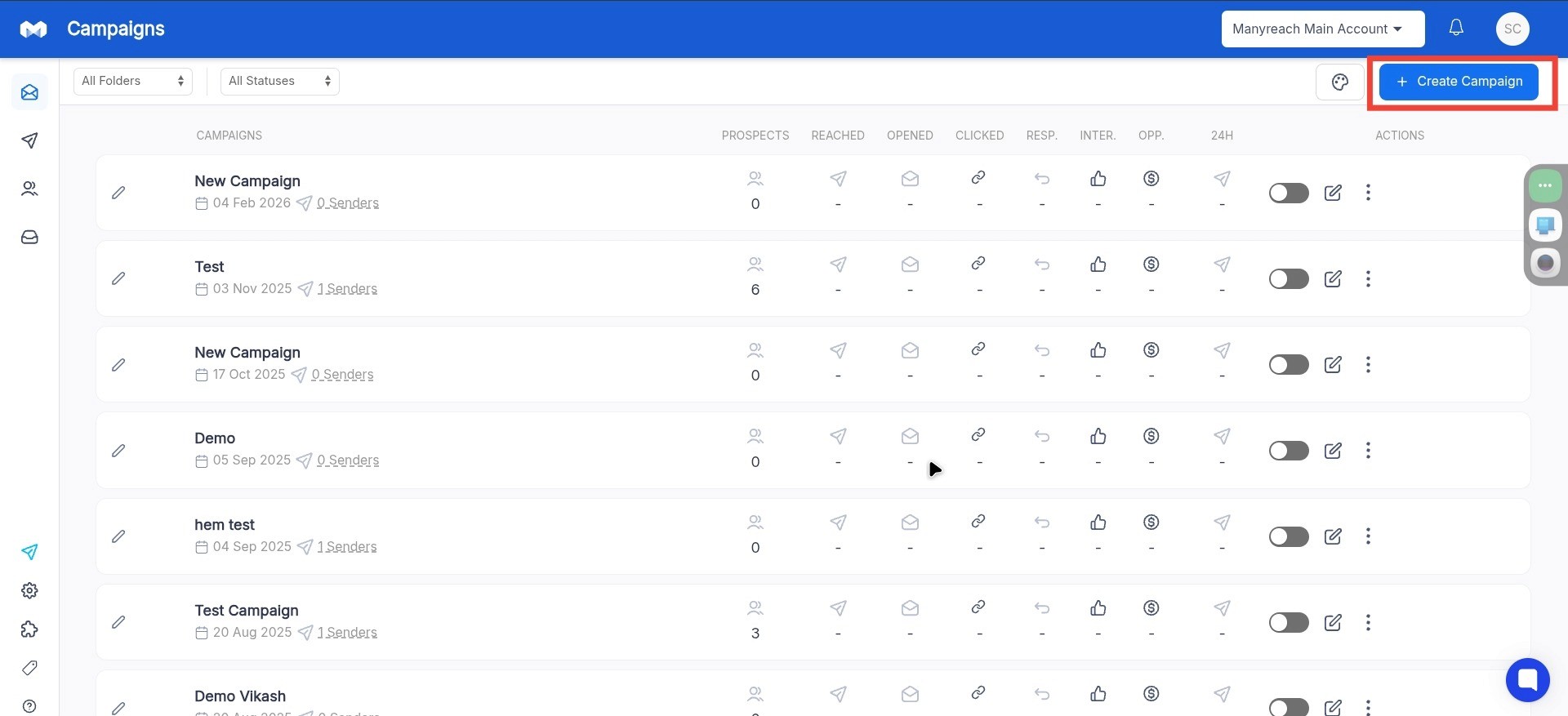
1. Create a Campaign
First, go to your Manyreach dashboard and create your campaign.
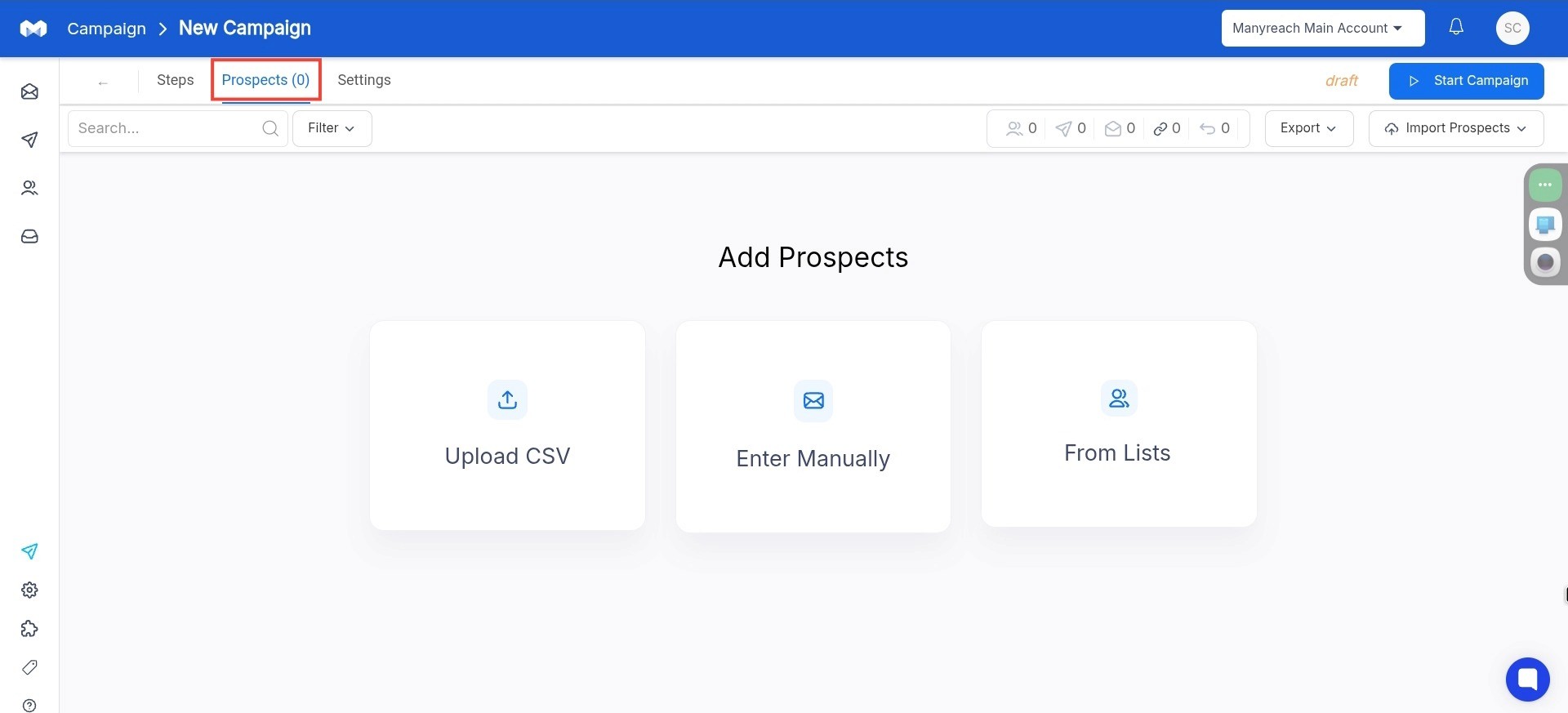
2. Upload Contact
After creating your campaign, go to the “Prospects” section, and upload your contact list there.
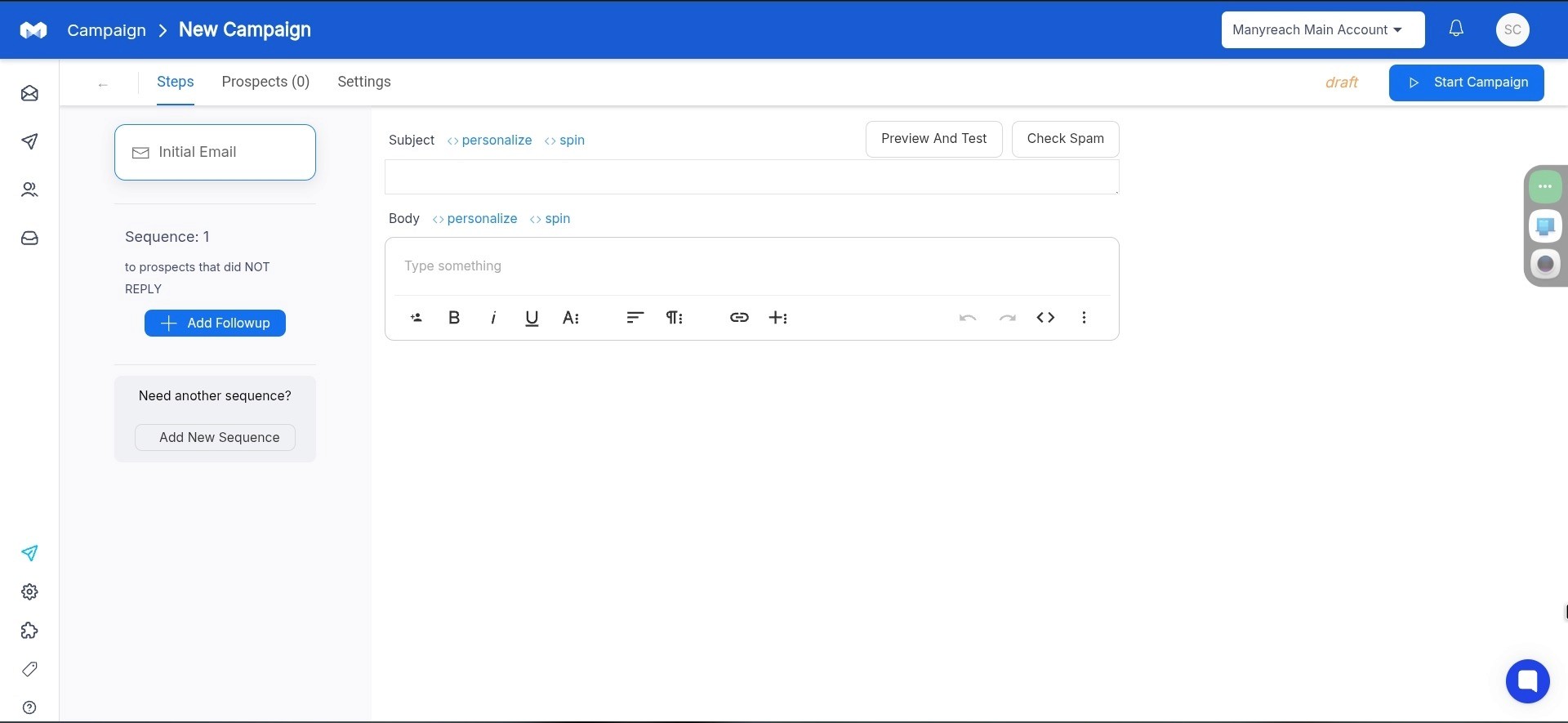
3. Compose Your Email
Now, write your subject lines and compose your email.
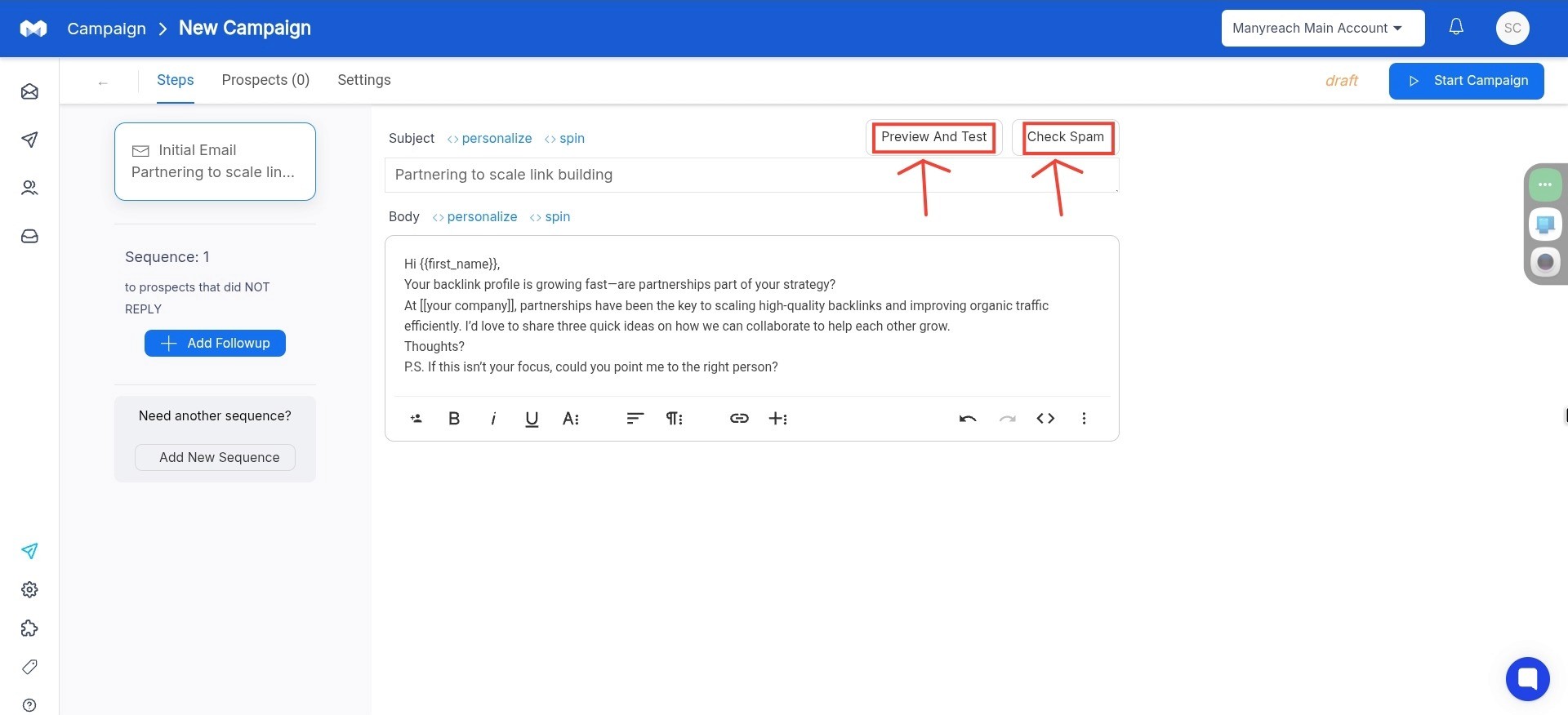
4. Check Spam, and A/Z Test Your Email
After composing your email, click on the “<> spin” option, and click on the A/B test option, to turn on the A/B testing. After that check if there’re any spam words, and sentences with the help of a spam checker and A/Z test your email.
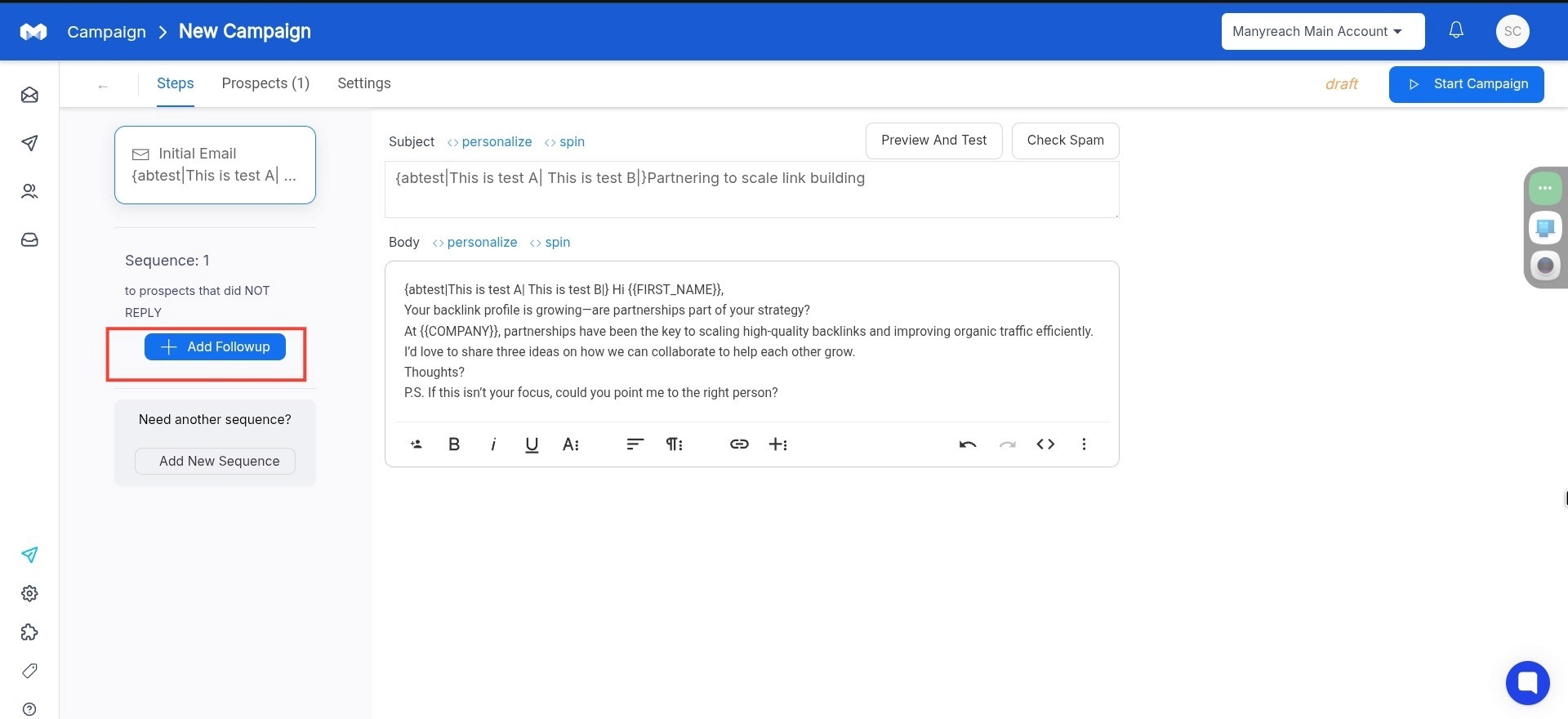
5. Set Follow-up Emails
Now set-up your follow-up sequences. You can do this by clicking on the “Add Follow-ups” on the left side of the screen.
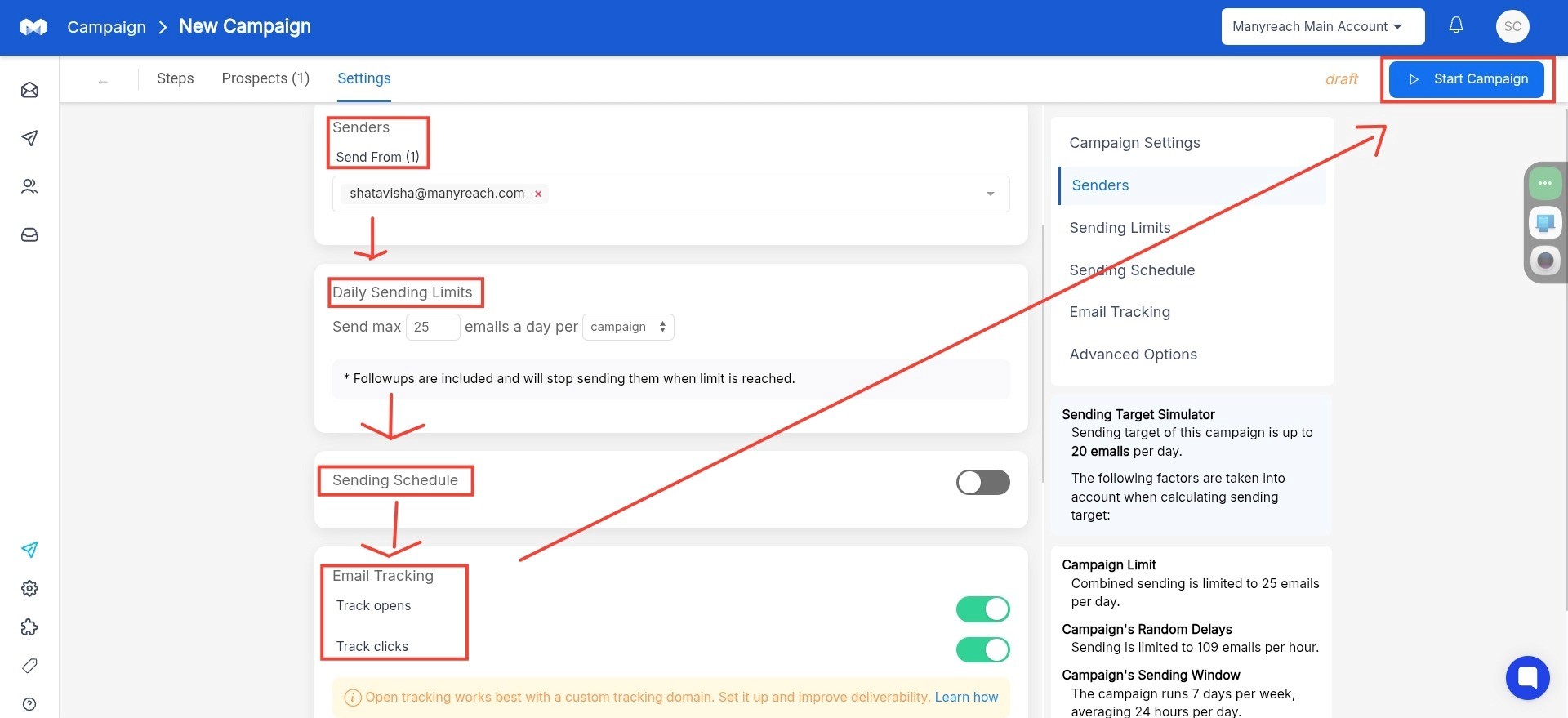
6. Complete Additional Settings & Start Campaign
Finally, complete the additional settings by selecting a sender, sending schedule, daily sending limits, and turning on email open, and click tracking. And that’ll be it, after that you can start your campaign.
Is It Legal to Send Cold Email?
Yes, cold emailing is legal, if done correctly. Make sure to follow these basic rules:
Only email business addresses (for B2B).
Avoid misleading subject lines.
Always offer a way to opt-out (unsubscribe).
Comply with GDPR, CAN-SPAM, or local regulations.
Moreover, different regions have different regulations, here are those:
United States (CAN-SPAM Act): In the United States of America, cold email requires clear identification. So you can’t add any deceptive subject lines, and at the same time you must add opt-out options in your emails.
European Union (GDPR): In Europe the law is much stronger. So it requires your legitimate interest and strong data protection measures from your end.
Canada (CASL): In Canada, you need explicit or implied consent in most of the cases while sending out cold emails.
Along with it, now you have to also follow the Google regulations too:
Proper SPF DKIM, DMARC: You must use proper SPF, DKIM, and DMARC authentication.
Unsubscribing Options: You must always provide an easy unsubscribe option to your recipients.
Sender Reputation: A good sender reputation is highly necessary to send cold emails. So maintain it by warming up your domain, and control bounce rates.
Benefits of Cold Emailing in 2025
Cold emailing continues to be a high-performing outreach channel because:
Cold emails scale very easily.
You can automate them, yet keep the emails personalized.
Cold emails target ideal clients directly.
It’s cost-effective.
Even small teams can succeed with cold emails.
Scalability
Once you build your lead list and templates, you can scale your campaign to hundreds of prospects without extra manual effort.
Automation for Personalization
Modern tools let you send emails that feel personal while automating everything behind the scenes, saving time while improving response rates.
High Targeted Approach
Cold emails are sent only to prospects who fit your Ideal Customer Profile (ICP), making it highly relevant and efficient.
Most Affordable Lead Generation Channel
Compared to paid ads or trade shows, cold email is extremely low-cost and still delivers high ROI.
Can Be Used for Small Teams
You don’t need a large team to run successful cold email campaigns. With the right tools and processes, one person can handle the entire workflow.
The Reason Why You Should Follow-Up
A lack of response does not always mean that your prospect lacks interest.
Most prospects don’t reply simply because they’re busy, distracted, or planning to respond later.
That’s why follow-ups act as reminders, not annoyances, when done correctly.
Follow-up sequences work mostly when:
Your prospects resurface your email
The email shows consistency and professionalism
Your email increase visibility without pressure
follow-ups significantly increase reply rates without damaging relationships, when you write it politely and space it properly.
Various Use Cases of Cold Email
There are several places where you can use cold emailing. Here, let me give you some examples:
For Lead Generation
You can use lead generation for your startups, small businesses and for lead generation agencies.
Startups
Startups need to generate revenue quickly, and don't have the time to wait for leads to turn up organically. So they use cold emailing to reach the right people faster with their products and services.
Template:
Subject: Helping [Prospect’s Company] grow faster
Hi [First Name],
I saw that you are growing your company. Luckily we also help startups like yours get their first 100 customers using outbound strategies that don’t burn your budget.
Want to explore how this might work for [Company Name]?
Best,
[Your Name]
Small Businesses
Small businesses cannot run massive ad campaigns due lack of budgets, neither can they opt for referral campaigns. That's why they use cold emails to reach the right clients without spending a fortune.
Template:
Subject: A quick idea for [Prospect’s Business]
Hi [Name],
I help small businesses like yours get more local clients without spending on ads. Thought this might be useful for [Business Name].
Will you be open to a quick call this week?
Thanks,
[Your Name]
Lead Gen and Marketing Agencies
Getting new clients for agencies is always a struggle, especially when there's so much competition. So cold email becomes your way of approaching prospects who need their services, but are not aware of them.
Template:
Subject: Helping [Their Client Type] scale
Hi [Name],
I work with agencies helping them get consistent inbound leads without relying on referrals or ad spend.
Would love to share how we helped a similar business grow 2x in 3 months.
Can we talk next week?
Best,
[Your Name]
To Book Meetings
If people show up for meetings, half of the job is done for businesses and cold emails give them to do that without annoying prospects with calls and DMs. No hard selling required, just a simple email inviting them to chat.
Template:
Subject: Quick chat this week?
Hi [Name],
I’d love to introduce [Your Solution], a simple way to [Prospect's Pain Point].
Would Thursday be a good time for a 10-minute chat?
Thanks,
[Your Name]
For Networking, Partnerships, and Backlinking
Cold emails are excellent to reach prospects for building relations and partnerships.
Networking
Every new business needs to network, build backlinks and build relationships with other businesses. And, sending cold emails helps them with that.
Template:
Subject: Let’s connect
Hi [FName],
I have recently come across your work in [Industry], and I think we could benefit from sharing each other's insights and exploring synergies.
Are you open to connecting and networking?
Best,
[Your Name]
New Partnership Opportunities
Cold emails can also help businesses to partner with other businesses. It helps them to reach prospects and tell them how a partnership can benefit both the businesses. Here is a template of a cold email for new partnerships.
Template:
Subject: Possible partnership?
Hi [Name],
I think our products complement each other well. I’d love to explore if there’s a partnership opportunity that benefits both sides.
Would you be open to a call next week?
Regards,
[Your Name]
Backlinking for SEO
Getting high quality backlink from site owners is also a form of partnership that can benefit both businesses to boost traffic, and increase reach. Cold emails can help businesses to pitch about a collaboration.
Here's an example:
Template:
Subject: Quick idea for collaboration
Hi [FName],
I recently read a piece that you wrote on [Topic]. And I have a similar article that deals with similar topic. Would you be open to a backlink swap or collaboration?
Please let me know your thoughts on this.
Thanks,
[Your Name]
For Hiring
Businesses can use cold emails for hiring and recruiting new employees. The following are some use cases.
Recruiting
Hiring isn't just about posting a job post, it's more about finding the right candidate. And that means sometimes, recruiters must reach out to the right candidates.
A simple and direct email can help in that by landing up on the candidate's inbox for the recruiting process.
Here is an example:
Template:
Subject: Opportunity at [Company Name]
Hi [Candidate Name],
I recently came across your profile and think you’d be a great fit for a role we’re hiring for at [Company Name].
Can we chat briefly this week?
Best,
[Your Name]
Freelancing
A freelancer needs to reach out to various potential clients everyday, and pitch their services. Using a cold email automation system, freelancers can reach new clients easily, without.
Here is an example:
Template:
Subject: Need help with [Service]?
Hi [Name],
I help companies like yours with [Freelance Service]. Just wondering if this is something you’d like to explore.
Happy to share past work.
Cheers,
[Your Name]
Job & Internship Applications
Cold emails also help job and internship seekers to reach out to recruiters even before a job position opens up. A clear, and directly written cold email will help the candidate to reach employers and land them a position in their company.
Here is an example:
Template:
Subject: Open to interns?
Hi [Name],
I’m [Your Name], and I’d love to intern at [Company]. I’ve done [Relevant Experience], and I think I can bring value.
Would it be possible to connect?
Thank you,
[Your Name]
IT / SaaS Companies
Cold emails are excellent ways to book meetings and acquire new users for SaaS and IT companies. So, a good cold email can help them reach out to multiple clients and schedule meetings with prospects.
Here is an example:
Template:
Subject: Quick idea for [Company Name]
Hi [Name],
We help SaaS teams like yours boost demo bookings with targeted outbound email.
Want to see how we do it?
Best,
[Your Name]
What Is Cold Email Outreach, and How Can You Effectively Use It?
Cold email outreach means sending emails to potential clients you’ve never contacted before to start business partnership with. This is a step-by-step process. Let’s break it down:
First: You Must Identify Your Target Audience & Build an ICP
Know who you’re targeting and define your Ideal Customer Profile (ICP) based on industry, company size, pain points, etc.
Second: Build Your Lead List
Use tools like Apollo, LinkedIn, or manual research to gather verified leads matching your ICP.
Third: Account & Email Deliverability Setup
Warm up your email accounts and ensure DNS records (SPF, DKIM, DMARC) are configured.
Fourth: Writing Emails, Optimizing, and Personalizing Them
After your account is set, it's time to curate a good email, optimize and personalize them at scale. Here is how you can do that:
Cold Email Subject Line
Keep it short, within 2–4 words, clear, and relevant. Also, remember to avoid spam-triggering words like “free,” “guaranteed,” or “buy now.”
Perfect Preview Text
The preview should reflect the content of the email and give a reason to open it.
Email Body Content
Write between 100–150 words. Make it about the recipient, not you. Use merge tags to personalize. Focus on their challenges and offer one solution. End with a clear CTA.
Fifth: Analyze & Track Your Email
After you have launched your campaign, it is time to track how it's performing. Here are the metrics that can help you:
1. Deliverability Rate
Before, a healthy open rate was considered around 40%, but now various email providers block open tracking. So, check reply rates, bounce rates and spam rates, they’re the key indicators of how your cold emails are performing.
2. Reply Rate
A reply rate of 1 to 5% means there is good engagement from your prospects, anything beyond that means your campaign is doing great. So aim to improve it by refining targeting and messaging.
3. Click-through Rate (CTR)
If you're using links with your emails, then don't forget to track how many people are clicking that link. According to the latest cold email statistics, a CTR above 10% is considered decent.
Sixth: Optimize
Now, you can use your data to improve next campaigns. And before, before that ask yourself:
At what time do most people open your emails?
Will longer or shorter emails work better?
What kind of CTAs do most prospects reply to?
Why Do You Need Personalization
Personalization in cold email goes beyond using a prospect’s first name.
So effective personalization shows that you understand the recipient’s role, company, or challenges. This will help you to build credibility and increase response rates.
Good personalization in a cold email usually includes:
The name of your prospects’ company or industry
Reference their recent activity or growth
Address a recent problem that is relevant to their role
Basically the goal is to make the email feel written for them, not copied from a template.
Common Cold Email Mistakes to Avoid
Even with the best templates, mistakes might ruin your entire campaign. So to avoid making such mistakes, here are few cold email tips that you can follow:
1. Avoid writing Spammy subject lines
Spammy lines like, “Best Web Services Available” will directly send your cold emails to the spam list. So it’s better to write personalized subject lines that would invoke your recipient’s attention.
2. Warm Up Your Account
Warm-up your account, before you start your outreach from your new email account. Or else, all your emails might go to the spam list, and also damage your sender reputation.
3. Make It About Recipients
Your cold emails should focus more on your recipients than you. So, talk about a problem that your prospect is facing, or a recent deal that they have cracked. Once you have addressed those factors, then talk about how you can help them with the problem, or crack more such deals.
4. Go Beyond First Names
Cold email personalization is not just the first names of your prospects. So, add their company names, and their positions to show that you have done your research. It will increase your credibility.
5. Include an Opt-out Option
Don’t forget to add an opt-out option. It shows that you’re giving your recipients the chance of walking away from this possible association from the very beginning.
Best Practices to Achieve the Desired Cold Email Outreach Goal
If you follow these practices, you will never have any issues with your cold email deliverability or face any kind of legal penalties.
So, here are the best practices that can help you achieve your outreach goals:
Use More than one account
Keep your lead lists clean
Always warm up your cold emails before sending them
Follow-up with prospects more than once
Your emails must be clear and concise
Have a clear call-to-action button
Always A/B test your campaigns
1. Use More Than One Email Account
Spread your emails across accounts to avoid deliverability issues. This will also help you to scale outreach safely without triggering spam filters or sending limits.
2. Clean Your Lead List
Remove invalid or outdated emails regularly. This will reduce bounce rates and improve your sender reputation, and also keep your campaigns healthy.
3. Warm Up Email Accounts Before Sending
Start with low volumes and increase gradually. This will help you to build trust with email service providers and prevent your messages from landing in spam.
4. Follow Up More Than Once
One email isn’t enough. Send 2 to 4 follow-ups. Each follow-up will increase your chances of getting noticed and receiving a reply without being pushy.
5. Always Include an Opt-Out Link
Make it easy for recipients to unsubscribe. This will show respect for your prospect’s inbox and keep your outreach compliant with email regulations.
6. Keep Your Email Simple and Clear
Tell the recipient exactly what you want them to do. A specific CTA will remove confusion and guide your prospects toward the next step, like booking a call or replying.
7. Have a Clear Call-to-Action
Tell the recipient exactly what you want them to do. A specific CTA will remove confusion and guide your prospects toward the next step, like booking a call or replying.
8. A/B Test Your Campaigns
A/B test your cold emails with different subject lines, email bodies, and CTAs to find what resonates most. This will help you to identify the most effective version and continuously improve your outreach performance.
Why Manyreach Is the Right Cold Email Tool for You
Manyreach is built for reliable cold email delivery. Its unshakable deliverability, combined with automatic warm-up, ensures your emails land in inboxes, not spam.
Its newly added report feature lets you track open rates, replies, and link clicks in real-time, and now you can download outreach reports as images to share with your team or clients easily.
FAQs
1. What does cold email mean?
It’s an email that you send to prospects with whom you have never dealt before. And you usually for business purposes.
2. What the Ideal length of a cold email should be?
The ideal length of a cold email should be between 100-150 words maximum. Keep your statements within this quota, and keep the language simple. It will help you achieve your desired goals.
2. Is it legal to send a cold outreach email?
Yes, if done correctly and in compliance with local regulations, cold outreach email is the best way to network with new prospects and collaborate.
3. How is a cold email different from a warm one?
A warm email is sent after prior interaction or interest, while a cold email is the first contact.
4. Who can benefit from cold emailing?
Startups, agencies, freelancers, recruiters, and SaaS companies all use cold emails.
5. Is cold emailing acceptable?
Yes, as long as it’s targeted, personalized, and professional, cold emails are acceptable.
6. Do cold emails actually generate leads?
Absolutely. When done right, cold emails can get high reply rates and quality leads.
7. What is a cold B2B email?
It’s a cold email sent from one business to another, aiming to start a partnership or sale.
8. Can I send cold emails through Gmail?
No, Gmail is not ideal to send cold emails to prospects. To send cold emails, it's best to use a cold email tool.
9. How many cold emails should I send daily?
You can start with sending 20 to 40 emails per day. However, you can gradually scale as your account warms up.
Conclusion
Cold emailing is the most reliable, scalable, and affordable outreach method in 2025. cold email gets your work done, if you use the right strategies, whether you're looking to generate leads, build partnerships, or recruit talent.
Follow the process, personalize your email, and stay compliant. And if you're serious about results, use tools like Manyreach to manage, track, and scale your campaigns with ease.

About the author
Shatavisha Chatterjee
Share Article
MORE BLOGS
You might like.
June 5, 2025
Outreach

33+ Ways to Say “Looking Forward to Working With You”.
what-to-say-instead-of-looking-forward-to-working-with-you
February 23, 2026
Glossary

What is Budgeted Sales Price Definition?
budgeted-sales-price
February 23, 2026
Best Practices
10 Best Ad Agency Lead Generation Partners for Marketers
ad-agency-lead-generation

